Stamford, CT
Stamford is Connecticut’s most dynamic commercial market—a corporate urban suburb where 60,000 downtown office workers, an influx of Manhattan transplants, and a rapidly growing resident base create layered, year-round demand for hospitality. With a population of approximately 139,000 and a median household income of $107,474, Stamford offers the purchasing power of a major city without the regulatory burden of New York.
How to Get a Liquor Permit in Stamford, CT
Getting a Stamford liquor permit (often called a liquor license) requires navigating both Connecticut’s state licensing process as well as local requirements. While the state application is handled through the Department of Consumer Protection, city-specific rules add unique steps to the process.
The Connecticut Liquor Permit Application Process
Applications must be submitted through the CT Department of Consumer Protection’s eLicense portal and include documentation for three key areas:
The Backer: The business entity, with financial records and ownership documentation
The Permittee: The individual representing your business
The Location: Where alcohol service will take place
Permit types range from Restaurant Liquor (LIR) to Package Store (LIP) to Café (CAF) permits, and each have associated state fees. Most applications take three to six months to process, though provisional permits can be obtained in three to four weeks for an additional cost of $500. For a complete walkthrough of Connecticut's permit process see our guide to Connecticut Liquor Permit applications.
Stamford Liquor Permit Requirements
Outdoor Dining Rules and Patio Permits
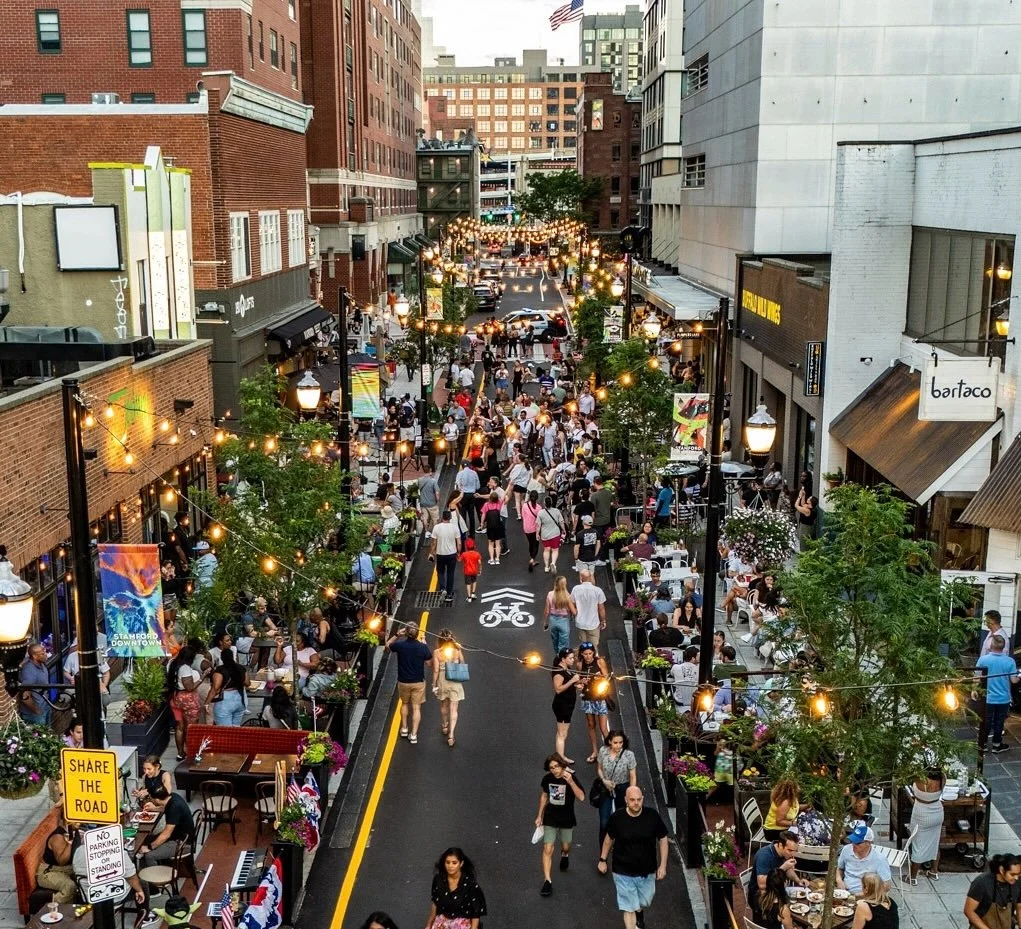
Stamford’s StrEATery program emerged in the early months of the COVID-19 pandemic, which spurred creativity as restaurants adapted to new restrictions. Stamford later made outdoor dining permanent, distinguishing between “sidewalk cafés,” which occupy a portion of public sidewalks, and “streateries,” which occupy on-street parking areas.
The City of Stamford requires restaurants to seek permits to offer outdoor dining between spring and fall. Restaurants should collect required application materials, including insurance documents, a sketch of the layout, and pictures of barriers to sure ADA-compliance. Applicants will also submit their liquor license itself—if they plan to serve alcohol. The permit requires a review by city staff and a fee, which varies by number of seats, so applicants should apply as soon as possible to accommodate lead time.
Stamford Package Store Limit
Connecticut law allocates Stamford a maximum of 54 package store permits (one per 2,500 residents). When the cap is reached, aspiring package store owners often acquire existing businesses. To find the current number of package store permits available in Stamford, check the CT Department of Consumer Protection’s database.
Temporary Permits
Connecticut allows temporary permits for special events such as festivals, tastings, and charitable functions. Applications must be submitted at least 10 days prior to the event. Stamford’s active events calendar—including biannual Restaurant Weeks and their outdoor dining program—creates recurring demand for temporary permits among operators and event organizers.
Not sure where to start?
We offer a Feasibility Study that evaluates your location, eligibility, and zoning requirements before you commit to the full application. Schedule a call to find out if you qualify for a Stamford, CT liquor permit.
Why Stamford?
The Quintessential Urban Suburb
Most people think of Stamford as a satellite of New York, just a 45-minute commute away from Grand Central on Metro-North. The reality runs both ways. The city, anchored by multiple Fortune 500 companies, draws over 40,000 workers daily. Sometimes called a “corporate urban suburb,” Stamford’s workforce means a steady stream of attendees to corporate lunches, happy hours, conferences, and client entertainment events. Stamford’s amenities also make the city attractive to residents, who come to enjoy outdoor dining, regular concert series, and other weekend experiences. In fact, the city is growing—Stamford posted a 10.5% population increase between 2010 and 2020, the fastest of any Connecticut city.
Two Key Neighborhoods
The most active dining scenes are mere steps from the Stamford Transportation Center: Downtown Stamford and Harbor Point. Downtown Stamford features a high concentration of restaurants and bars, anchored by Bedford Street. From spring to autumn, the neighborhood takes full advantage of Stamford’s Outdoor Dining Program, which allows restaurants to apply for permits as either a “sidewalk cafe” or “streatery.”
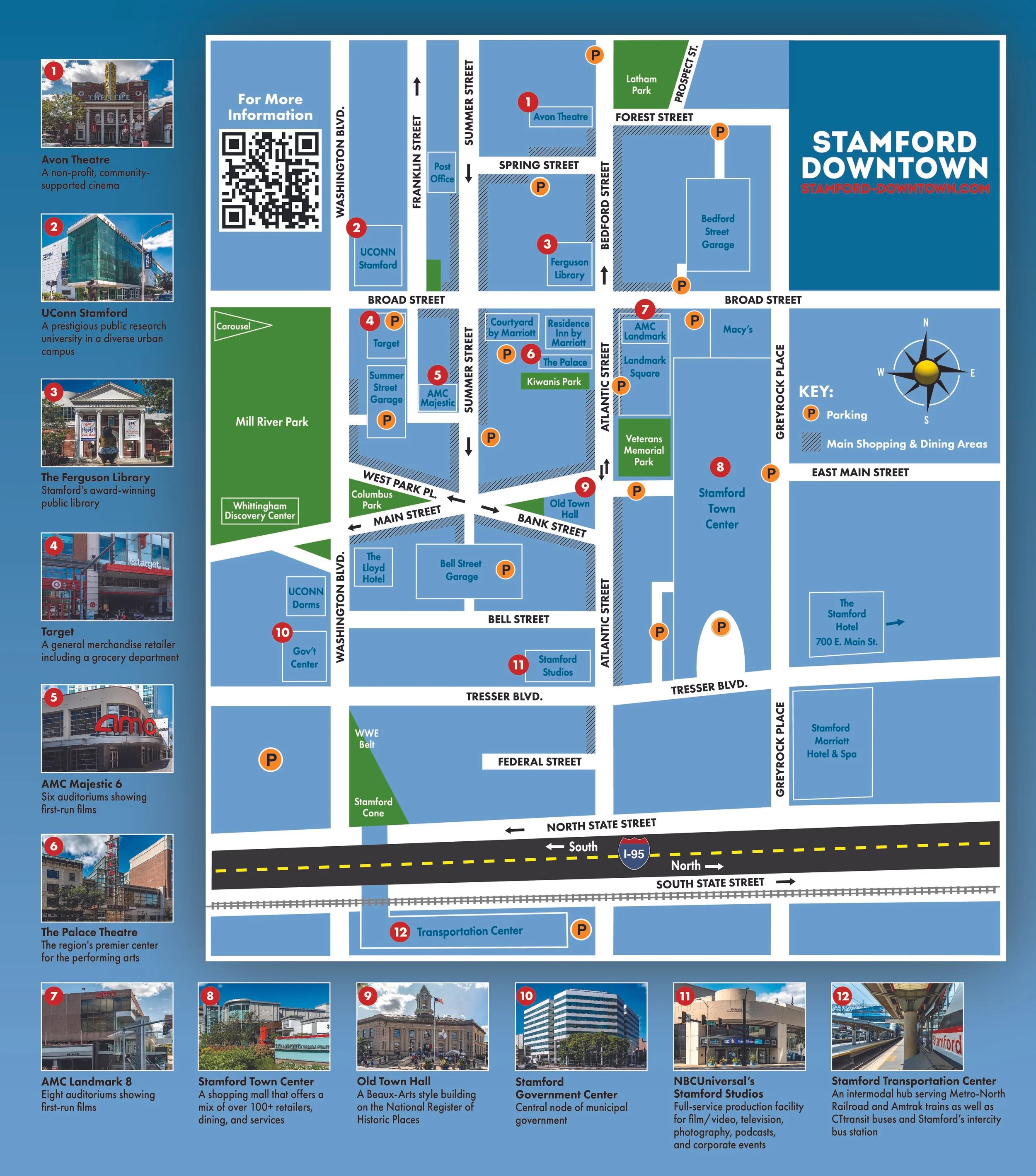
Map of Downtown Stamford
In addition, Stamford’s South End neighborhood is currently undergoing a major redevelopment. Dubbed Harbor Point, the neighborhood has begun to see an influx of new housing, thousands of new units and millions in public infrastructure investments. New developments will accompany the existing dining scene, which features restaurants like Sign of the Whale and Third Place by Half Full Brewery. Harbor Point’s median resident age is 31.8—the youngest concentration in Stamford.
The Opportunity
Stamford offers a rare combination: the purchasing power of a major city, the cost structure of a secondary market, and the infrastructure of a place actively investing in its own growth. For operators opening a first Connecticut location, expanding from New York, or building a neighborhood concept in an underserved corridor, Stamford’s layered demand—corporate, residential, and transit-driven—creates a foundation that doesn’t depend on any single customer segment.
Ready to Apply for a Stamford Liquor Permit?
For $350, we assess your location and eligibility before you invest in the full application. The fee applies toward your consulting engagement if you move forward. Tell us about your project below to meet with a liquor permit consultant.