Why Barbershops Want Liquor Permits (And How They Make It Work)
Across Connecticut, a growing number of barbershops are discovering a simple way to stand out in a crowded market: offering beer, wine, or cocktails on-site.
Much like coffee shops that successfully add alcohol without becoming bars, grooming businesses now use liquor permits to elevate the customer experience. When done correctly, alcohol becomes a low-lift, high-impact amenity that supports premium pricing, smoother operations, and repeat visits.
THE BUSINESS CASE
Unlike restaurants or bars, barbershops aren’t looking to drive volume with alcohol. Instead, alcohol functions as a value-add, a way to reinforce premium positioning.
Paul Wilson, an owner of multiple Hammer & Nails grooming locations in Connecticut, says alcohol is intentionally integrated into the brand’s experience: “The goal is to weave the entire experience, from the minute you walk in and check in, all the way through one or multiple services. It’s not about being a bar—it’s about the start-to-finish experience.” Every guest can receive a drink with their service, with clear limits in place. Higher-tier memberships unlock access to premium spirits, while a rotating “drink of the month” keeps the offering seasonal and simple.
From an operational standpoint, alcohol can also solve a common problem for service-based businesses: timing. Offering a comfortable lounge space with a drink encourages clients to arrive 10 to 15 minutes early, helping reduce late arrivals that can disrupt a full day of appointments. In a business where one late client can create a cascading scheduling issue, that buffer alone can be a meaningful operational advantage. “Having a lounge and offering a drink opens the door to say, ‘Come early. Relax.’”
OPERATIONS: LOW LABOR, HIGH VALUE
One of the most common misconceptions about adding alcohol to a barbershop is that it requires bartenders or complex cocktail programs. In practice, many successful grooming businesses keep offerings intentionally straightforward.
At Hammer & Nails, no bartender is needed. Front desk staff pour drinks using straightforward, repeatable recipes, often with just two or three ingredients. “They measure, pour, mix, add bitters, garnish, and you’re done. We don’t want staff spending a lot of time making drinks—the goal was simple and quick,” Wilson said.
The result is a drink that feels premium to the customer without adding meaningful labor costs or slowing down operations. “It’s kind of our secret hack. You can make what feels like a $15 or $20 cocktail very quickly and easily, without anyone bartending.” This mirrors what many coffee shops have found when adding beer or wine: pouring a drink is often easier than preparing food, while delivering a strong return in customer satisfaction and brand perception.
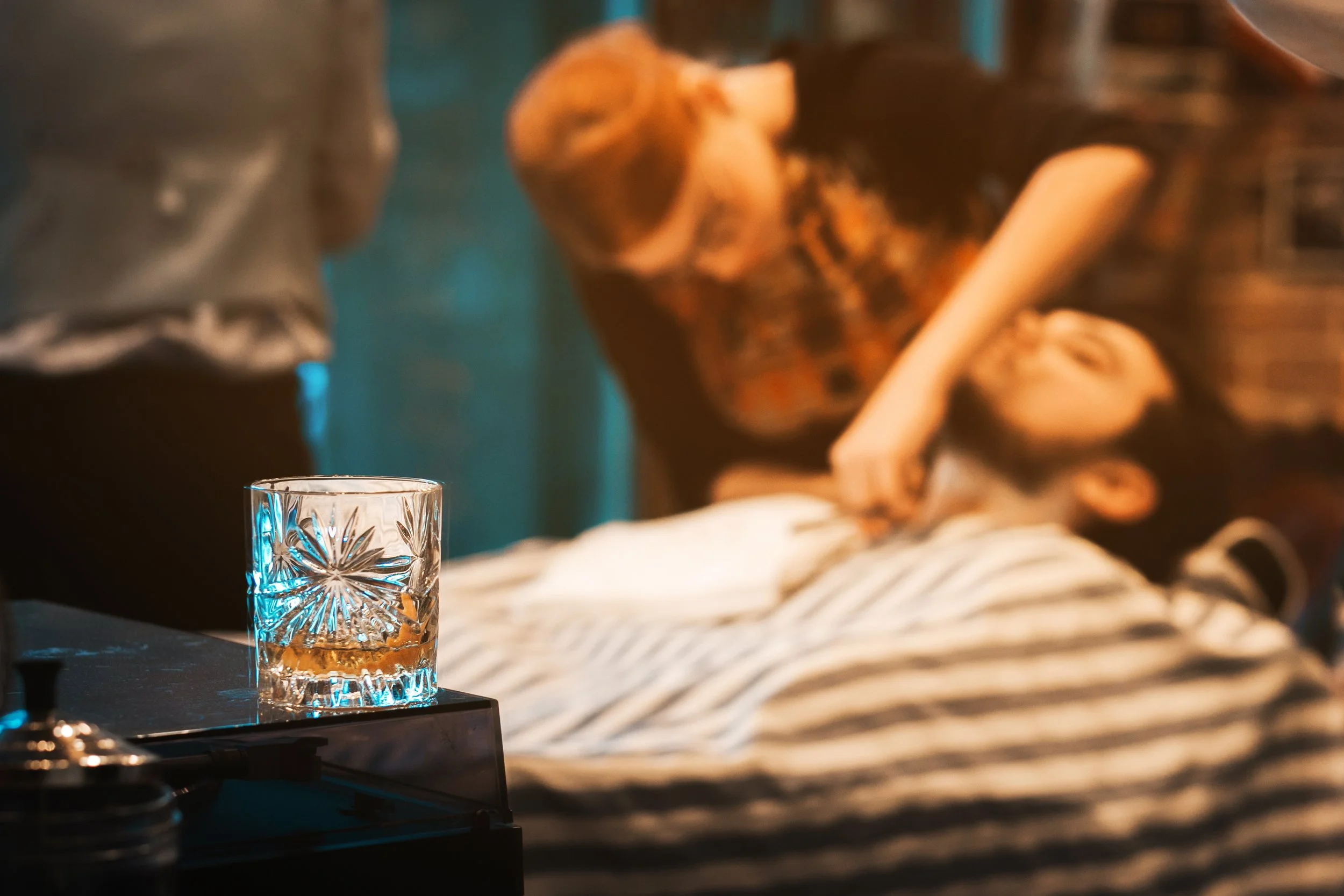
Barbershops often lean into masculine branding with whiskey and beer
BRANDING: A RELAXED, UPSCALE ENVIRONMENT
Alcohol also plays a role in how grooming spaces are used.
Clients may arrive early, bring a friend, hold informal business meetings, or simply relax before a service. In membership-based grooming models, that hospitality helps reinforce the idea that the business offers more than a transactional haircut.
“It becomes a separator, or the cherry on top” Wilson said, noting that alcohol is one of several premium touches that help customers justify higher monthly memberships when comparing grooming options. Importantly, alcohol is never positioned as the main attraction. Coffee, non-alcoholic options, and mocktails remain available, ensuring the experience feels inclusive and aligned with a wellness-forward approach.
LOGISTICS: WHAT KIND OF LIQUOR PERMIT DO BARBERSHOPS NEED?
In Connecticut, grooming businesses like Hammer & Nails typically operate under a café permit. This permit is designed for establishments that serve alcohol but are not full-service bars or restaurants.
Why to Choose a Café Permit
Alcohol remains secondary to the primary business
It supports a lounge-style environment
It allows alcohol service without a kitchen
Food Requirements Simplified
Café permits do require access to food, but this doesn’t mean your barbers need to double as waiters. Many businesses meet this requirement by:
Offering prepackaged food
Keeping takeout menus from nearby restaurants
Being able to facilitate food delivery within a reasonable timeframe
With food delivery apps, this requirement is typically easy to satisfy, especially for barbershops situated in dense commercial districts or shopping centers.
Caveat
Because a café permit treats the space like a bar, businesses must technically be able to serve alcohol to walk-in customers, not just clients receiving services. In practice, this is not a core part of the business—but it may be an opportunity to upsell curious patrons.
INDUSTRY TRENDS: BARBERSHOP LIQUOR PERMITS AS A GROWING PHENOMENON
Across the grooming industry, brands are moving away from quick, transactional services and toward higher-touch, experience-driven models. Alcohol fits naturally into that shift.
There is also growing conversation around permit structures better suited to service-based businesses, such as “pour permits” in other states that restrict alcohol service to active clients. While those permits don’t currently exist in Connecticut, they reflect a broader recognition that not all alcohol service looks like a traditional bar.
While Hammer & Nails focuses on men’s services, the concept isn’t limited to barbershops. Many hair and nail salons offer wine or champagne as part of the appointment experience, particularly at higher price points. In those settings, alcohol serves the same purpose: hospitality, relaxation, and a sense of occasion. For example, Get Nailed of Branford advertises BYOB gatherings, billed as “rituals,” encouraging bridal parties, mother-daughter days, and other ways to make the visit into more of an outing.
As more grooming businesses adopt premium and membership-based models, alcohol is increasingly seen as one of the best ways to elevate the experience without dramatically increasing overhead.
THE BOTTOM LINE
For barbershops and grooming businesses, a liquor permit isn’t about becoming a bar. It’s about enhancing hospitality, improving operations, and creating a differentiated experience that customers are willing to pay for.
When approached thoughtfully, alcohol can be one of the most efficient ways to support premium pricing, membership models, and customer loyalty without adding significant labor or complexity.
If you’re considering adding alcohol to your grooming business, working with an experienced liquor permit consultant can help you choose the right permit, navigate local requirements, and streamline the application process.
Interested in exploring whether a liquor permit makes sense for your barbershop or salon? Contact us today for a free consultation.