As baby boomers enter retirement, the United States is on the precipice of a major wealth transfer—according to Barron’s, the children of baby boomers will receive $53 trillion by 2045. Tons of Connecticut restaurants, bars, and grocery stores are in fact family businesses, raising a pressing question: how will the next generation acquire liquor permits as they step into leadership roles?
In Connecticut, liquor permits are not considered assets that can be inherited or sold—rather, they are considered personal privileges, requiring an application to Liquor Control. However, when businesses are acquired or passed to a new owner, stakeholders may file for a “transfer of interest” to obtain state approval and assign a new permittee.
Below, we explain the transfer process, plus provide a case study to illustrate the unforeseen complexities that occur in generational transfers of alcohol-serving businesses.
Transfers of Interest
To start the process, business owners need to download the Transfer of Interest/Stock Application, complete with required forms and instructions. Transfers of interest applications must include the following documents:
Transfer application form, which lists current and proposed backers as well as any other liquor permits held by them and their immediate family
Backer financial statement, which states the source of funds for the acquisition
Two authorizations for the release of financial information
One for the legal entity acquiring the business
One for each new backer (i.e. each person acquiring stock in the business), plus a personal history statement (i.e. background check)
Executed copy of the buy/sell agreement
Substitute Permittee Application, naming a new permittee (if needed)
Unlike initial applications, transfers of interest do not require documentation about the premises itself, like a floor plan. After all, the existing business successfully obtained a liquor permit for that location. That said, Liquor Control now sends an agent to inspect the premises and educate the new permittee in the course of evaluating transfer of interest applications.
Case Study: Caraluzzi’s Markets
Caraluzzi’s, one of the most iconic grocery chains in Connecticut, is a multigenerational family business. “My grandfather started it as a single grocery store in Bethel,” said Jen Caraluzzi Dimyan, CFO of Caraluzzi’s Markets. Jen’s cohort contributed to the expansion of the business, which now has locations in Danbury, Wilton, Newtown, and Ridgefield.
“We were all encouraged to go work somewhere else before coming back into the business,” said Jen, “My nephew is doing what we did—he's out in the corporate world and has every intention of coming back. My daughter's still in college but she's determined that she wants to come back into the business as well.”
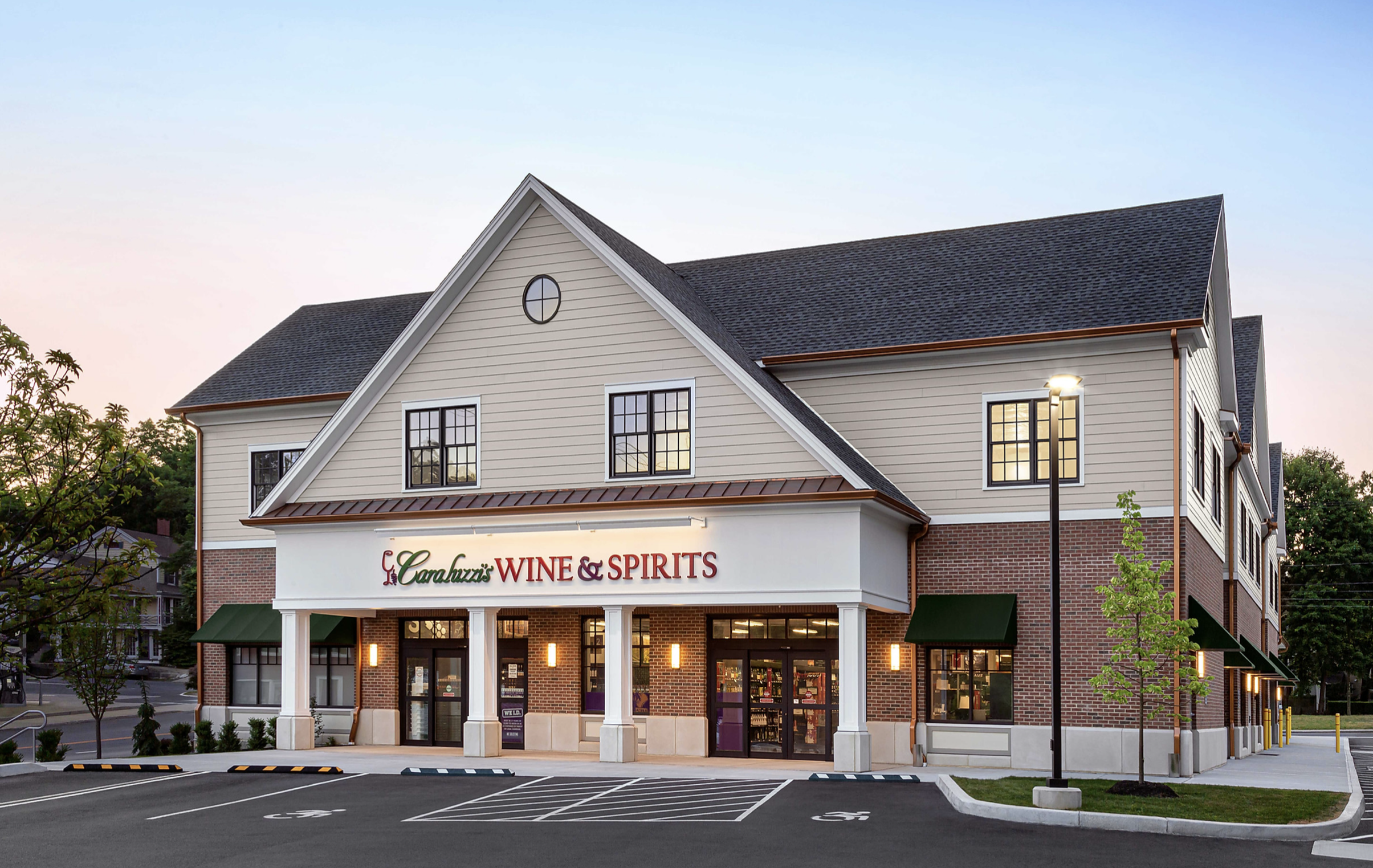
Caraluzzi’s Danbury location
As Jen’s mother began estate planning, the family decided to pass ownership of five Caraluzzi’s package stores to Jen’s daughter and nephew. The initial plan to pass the package store businesses to Jen and her brother was quickly ruled out. Connecticut law states that “no backer or permittee of one permit class shall be a backer or permittee of any other permit class,” and the two of them already served as backers for a grocery store.
Having encountered some regulatory complexity already, Jen quickly realized that compliance issues could lead to additional obstacles. Towards the end of 2025, Jen reached out to us with a question: how will the liquor permit transfer work? With Jen managing the project, we took on the role of problem-solver and bureaucratic navigator.
We began by confirming that the new backers would meet the state’s requirements, including CT’s limit on owning multiple package stores, which was recently increased to six. The following table shows how maintaining compliance influences the structure of the transfer.
| Problem | Solution |
|---|---|
| No grocery store backer or permittee may be a package store backer or permittee | Since the law rules out owners of the grocery store, gift package stores to the grandchildren |
| State law limits ownership of multiple package stores | Caraluzzi's meets requirements, since in 2021, CT introduced an expanded six-store rule |
| Transfer of interest applications ask for a buy/sell agreement | Gift affidavits replace buy/sell agreements when acquisition occurs for no consideration |
| No one under 21 may serve as a backer for a liquor permit | Trusts may back liquor permits, given an underage beneficiary and eligible trustee |
| No one under 21 may serve as a permittee | File for an eligible substitute permittee |
Complications like these have major impacts on estate planning discussions and family decision-making, as issues of fairness in inheritance must be addressed carefully. In this case, the family wanted a 50/50 split but had to comply with regulatory limits on backers and permit holders.
The most significant wrinkle in the Caraluzzi’s application was the need to transfer ownership of an alcohol-serving business to someone under the age of 21, Jen’s daughter. In order to maintain a 50/50 ownership split, we recommended forming a trust for Jen’s daughter’s stake. The distinction between backers and permittees allows the two children to co-own the five package stores, while an eligible representative—Jen’s nephew—serves as the permit holder.
Jen and her nephew met with a Liquor Control agent in January as the division recently added inspections to the transfer of interest process. “He did a good job of making my nephew aware of his obligations. Actually, he scared the crap out of him, so to speak,” Jen joked, a reminder that a liquor permit is a personal privilege—and with privilege comes responsibility.
“CT Liquor Permit was very helpful in guiding me. Everything went very smoothly,” said Jen, “It was a much quicker process than a regular liquor application.” Do you own a family business? Need help transferring a liquor permit? Contact us to get expert guidance on navigating the process.