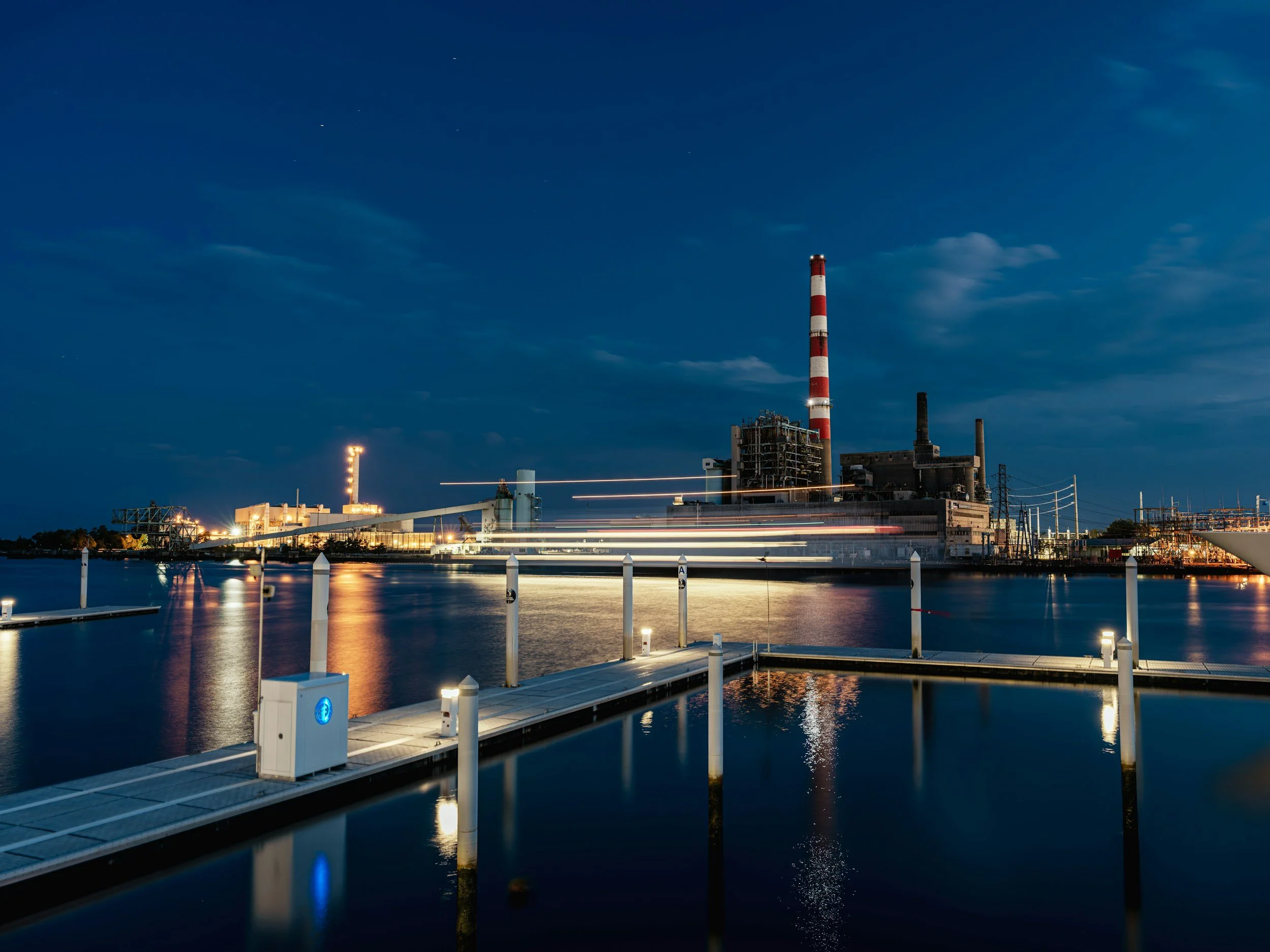
Bridgeport, CT
Bridgeport is Connecticut’s largest city, and one of the most densely packed as well. A transformed waterfront at Steelpointe Harbor, a downtown at effectively full residential occupancy, four working breweries, and the state’s deepest concentration of theaters and concert venues make it a market that draws well beyond its own borders.
How to Get a Liquor Permit in Bridgeport
Getting a Bridgeport liquor permit (often called a liquor license) requires navigating both Connecticut’s state licensing process as well as local zoning requirements. While the state application is handled through the Department of Consumer Protection, Bridgeport’s zoning code determines where alcohol service may take place.
The Connecticut Liquor Permit Application Process
Applications must be submitted through the CT Department of Consumer Protection’s eLicense portal and include documentation for three key areas:
The Backer: The business entity, with financial records and ownership documentation
The Permittee: The individual representing your business
The Location: Where alcohol service will take place
Permit types range from Restaurant Liquor (LIR) to Package Store (LIP) to Café (CAF) permits, and each have associated state fees. Most applications take three to six months to process, though provisional permits can be obtained in three to four weeks for an additional cost of $500. For a complete walkthrough of Connecticut's permit process see our guide to Connecticut Liquor Permit applications.
Bridgeport Liquor Permit Requirements
Where Alcohol Service Is Permitted in Bridgeport
Bridgeport’s zoning code, rewritten in 2021, works differently than the rest of Fairfield County. Most towns ask what zone a property sits in. Bridgeport also looks at the physical building (such as a storefront, a converted house, a shopping center, a larger freestanding structure, etc.). Permissions change depending on which one you’re in.
Restaurants and bars are permitted across downtown and the city’s mixed-use corridors, including Fairfield Avenue through Black Rock and the Main Street core.
Package stores are far more restricted. They're only allowed in storefront buildings and shopping centers, and only in a handful of zones. A package store cannot open in a converted house or a larger freestanding building anywhere in the city, regardless of zone. That rule alone removes a large share of Bridgeport’s available commercial space.
Live entertainment venues are permitted outright only in Storefront buildings in the downtown core. Everywhere else they require a special permit, and in several building types they are not permitted at all.
Residential neighborhoods permit no new commercial alcohol uses. Existing establishments there are locked into their current permit class and can’t convert to a different one.
So, an address alone doesn’t tell you what’s possible in Bridgeport. That determination happens before a lease is signed, not after.
City Approval Required
Most Connecticut towns handle liquor zoning sign-off administratively, meaning that a zoning officer signs off on the application if the project meets their standards. Bridgeport, however, requires a public hearing. For most projects that include alcohol service, you need a Certificate of Location Approval from the Planning & Zoning Commission, which meets the last Monday of each month at City Hall.
Applications are filed through the city’s Park City Portal.
Each certificate comes with a municipal fee (check Bridgeport’s fee schedule for the up-to-date cost).
A certificate issued after January 1, 2022 belongs to the operator, not the address, so new businesses at the same address still require an approval.
The city makes an exception for full-service restaurants outside a residential zone. But the code is specific: these facilities must include at least 400 square feet of sit-down dining, seating for 20, and men’s and ladies’ rooms reachable without walking through the bar. Missing any of the three means that the exemption does not apply. Restaurants inside residential zones aren’t exempt at all. Everything else goes to hearing: bars, taverns, brewpubs, banquet halls, social clubs, and package stores.
How to Prepare for the Bridgeport Liquor Permit Zoning Hearing
The code lists six criteria: neighborhood compatibility, traffic, property values, and similar. However, business owners should expect to answer questions about their operation in general, including logistics like parking, seating, hours of operation, and how you intend to handle noise.
Because Bridgeport's commercial corridors sit directly beneath apartments, business owners may be asked whether they have contacted residents in their building about their project. The hearing incorporates time for objections, including an opportunity for a rebuttal from the business owner. Therefore, those who come prepared do considerably better than those improvising at the podium.
Bridgeport Package Store Limit
Connecticut law allocates Bridgeport a maximum of 59 package store permits (one per 2,500 residents). When the cap is reached, aspiring package store owners often acquire existing businesses. To find the current number of package store permits available in Bridgeport, check the CT Department of Consumer Protection’s database.
Proximity Restrictions
Package stores may not open within 750 feet of a church, school, hospital, or daycare, measured entrance to entrance. However, the downtown area is exempt from this rule.
Not sure where to start?
We offer a Feasibility Study that evaluates your location, eligibility, and zoning requirements before you commit to the full application. Schedule a call to find out if you qualify for a Bridgeport, CT liquor permit.
Why Bridgeport?
CONNECTICUT’S Largest URBAN MARKET
Bridgeport is the largest city in Connecticut, roughly 153,000 residents packed into sixteen square miles. The customer is younger and more diverse than anywhere else in the region. Median age is 36.7. Roughly 45% of residents are Hispanic, and about a quarter of the city is foreign-born, with substantial Puerto Rican, Dominican, Brazilian, Portuguese, Jamaican and Haitian communities. That supports authentic Latin American and Caribbean concepts that simply cannot find their audience in the surrounding towns.
The Downtown Bridgeport Apartment Landscape
Thomas Gill, director of Bridgeport’s Office of Planning and Economic Development, described downtown in 2026 as having residential occupancy effectively at 100%, with a retail and restaurant mix that has grown into a blend, giving the city a distinct identity.
Bridgeport is actively marketing land to close the remaining gap. The city issued requests for proposals on two city-owned downtown parcels, Golden Hill Court and a Main & Middle assemblage, both roughly a block from the transit center and explicitly seeking multi-story residential designs with street-level retail or restaurant space.
Just north of the core, a $2.255 million state Communities Challenge Grant is funding the reimagining of Post Office Square as an outdoor public space: micro-retail incubator units, event space, food truck infrastructure, public art, and a beer garden to be operated by Berlinetta Brewery. A city-funded beer garden handed to a local brewer tells an operator exactly what kind of activity Bridgeport is willing to underwrite.
AN ESTABLISHED CRAFT BEER SCENE
Bridgeport supports four breweries, and the newest opened in late 2025.
Brewport is a downtown brewpub built around house-brewed beer and New Haven-style thin-crust pizza, and the default pre- and post-event stop for arena and amphitheater crowds. Berlinetta Brewing on Golden Hill Street, founded by brothers Chris and Rich Ruggiero, focuses on classic European styles (e.g. Czech dark lager, German pale lager, Belgian amber) and doubles as a vinyl record shop. Foolproof Brewing operates on Union Avenue and sponsors Bridgeport Art Trail programming. Twelvenote Brew Co. opened in Black Rock in November 2025 in the former Aspetuck Brew Lab space, taking over its equipment: a music-themed taproom with acoustic acts Thursday through Sunday, no sports on the TVs, dog-friendly and BYO-food.
That last detail is the real signal. A brewery closed after nine years and a new operator took over the space and equipment within about a year, drawing crowds immediately. This is a market with enough demand to recycle its own infrastructure.
An ARTS AND ENTERTAINMENT Magnet
No other Connecticut city concentrates this much programmed seating capacity. The Hartford HealthCare Amphitheater,a converted ballpark downtown, runs a full outdoor concert season. Total Mortgage Arena seats 10,000 at 600 Main Street; with the departure of its longtime hockey tenant, the city and the state Department of Economic and Community Development have jointly solicited a long-term operator to shape the venue’s next chapter.
The theater cluster is genuinely deep. The Klein Memorial Auditorium is a 1,400-seat Art Deco house from 1940, with bronze doors and a marble lobby, home to the Greater Bridgeport Symphony. Downtown Cabaret Theatre, founded in 1976 in a converted YWCA assembly room, runs year-round musical theatre plus an award-winning children’s program in a bring-your-own-picnic, tables-and-chairs format—over a million patrons since opening. The Bijou Theatre, Bridgeport Theatre Company and Vinnie Brand’s Stress Factory Comedy Club fill out the downtown venues.
Outdoors, Seaside Park—designed by Frederick Law Olmsted, who also designed Central Park—hosts the city’s largest events. The Barnum Festival, running since the late 1940s, spans May into July with the Skyblast fireworks, the Great Street Parade and Champions on Parade, all free. The Soundside Music Festival has brought two-day, single-stage lineups to the park with headliners including The Killers, Hozier, Noah Kahan and Vampire Weekend. The Bridgeport Art Trail, Barnum Museum, Housatonic Museum of Art, Beardsley Zoo and Captain’s Cove Seaport round out the year-round draw.
The practical consequence for an operator: a large share of downtown demand arrives from outside the city entirely, on a schedule you can plan around.
NEIGHBORHOODS WITH DISTINCT CHARACTER
Black Rock is the city’s established restaurant row. Fairfield Avenue running west toward the Fairfield line, historic and walkable and dense with independents. BRYAC anchors it with a raw bar and live music; Fire Engine Pizza Co. has been there more than 26 years; Trattoria ’A Vucchella serves rustic Neapolitan cooking and wood oven pizza. In 2026, Joseph Farrell and Sean Nye partnered with Fire Engine’s Marty McCarthy to open Carpenter’s Pub on Fairfield Avenue. Veteran local operators reinvesting in their own neighborhood is the strongest confidence signal a market can produce.
Downtown runs on event and pre-show trade. Ralph ’n Rich’s on Main Street has been the city’s special-occasion Italian restaurant for decades, steps from the amphitheater and the ferry. Joseph’s Steakhouse on Fairfield Avenue is a repeat Connecticut Magazine list-maker.
The East Side, East End and North End are dense residential neighborhoods with strong immigrant business corridors, lower rents and loyal local trade, where owner-operated restaurants, bakeries and markets do their best work.
And Merritt Canteen, opened in 1958 and once featured on Diners, Drive-Ins and Dives, still serves from its garage-style doors on Fairfield Avenue.
An Unparalleled TRANSIT Hub
Bridgeport station at 525 Water Street is among the best-connected transit points in the state: the transfer between Metro-North’s New Haven Line and the Waterbury Branch, a stop for Amtrak’s Northeast Regional and Vermonter, a hub for some seventeen Greater Bridgeport Transit routes plus Greyhound and Peter Pan, and directly adjacent to the Bridgeport & Port Jefferson Ferry terminal with vehicle and passenger service to Long Island. Both Sacred Heart and the University of Bridgeport run shuttles from it.
THE OPPORTUNITY
Bridgeport offers what no other Connecticut city can: genuine urban density, a young and diverse resident base, a metro catchment approaching a million people, and occupancy costs a fraction of what the surrounding Gold Coast towns command. The waterfront has moved from brownfield to working marina and waterfront dining. Downtown housing is full and the city is putting land on the market with ground-floor restaurant space written into the RFPs. Four breweries operate here, and the city is funding a beer garden for a fifth venue. And the entertainment infrastructure—an amphitheater, four theaters, a comedy club, a major music festival and one of the state’s oldest civic festivals—delivers customers from well outside the city limits on a predictable calendar.
Ready to Apply for a Bridgeport Liquor Permit?
For $350, we assess your location and eligibility before you invest in the full application. The fee applies toward your consulting engagement if you move forward. Tell us about your project below to meet with a liquor permit consultant.