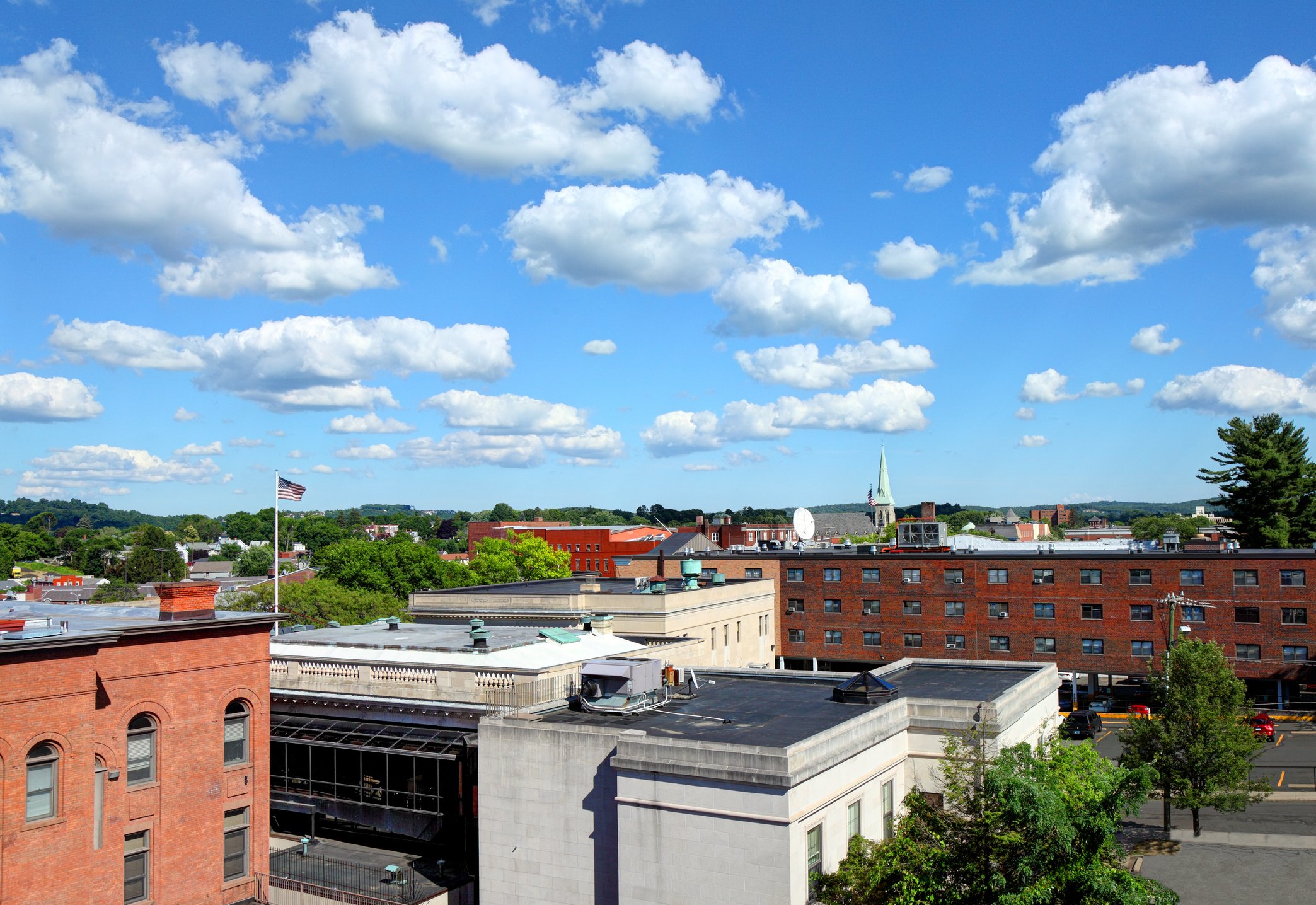
Danbury, CT
Danbury is the only Connecticut city to appear on Livability's Top 100 Best Places to Live in the U.S., recognized for its charming downtown, arts community, and proximity to New York City. Nestled between Candlewood Lake to the northwest and I-84's commercial corridors, it's a city where the restaurant and hospitality scene has real room to grow. With a population of 88,700 and one of the most ethnically diverse dining scenes in New England, Danbury is one of the state's most compelling markets—as well as one of the more nuanced permitting environments to navigate.
How to Get a Liquor Permit in Danbury, CT
Getting a Danbury liquor permit (often called a liquor license) requires navigating both Connecticut's state licensing process as well as local zoning requirements. While the state application is handled through the Department of Consumer Protection, Danbury’s zoning code determines where alcohol service may take place.
The Connecticut Liquor Permit Application Process
Applications must be submitted through the CT Department of Consumer Protection's eLicense portal and include documentation for three key areas:
The Backer: The business entity, with financial records and ownership documentation
The Permittee: The individual representing your business
The Location: Where alcohol service will take place
Permit types range from Restaurant Liquor (LIR) to Package Store (LIP) to Café (CAF) permits, and each have associated state fees. Most applications take three to six months to process, though provisional permits can be obtained in three to four weeks for an additional cost of $500. For a complete walkthrough of Connecticut's permit process see our guide to Connecticut Liquor Permit applications.
Danbury Liquor Permit Requirements
Special Permit Required
Every restaurant or café that wants to serve alcohol in Danbury needs a Special Permit from the Zoning Commission, even if the business falls within the commercial or industrial zone. A food-service only operation can open in most commercial zones without additional zoning approval, but the moment alcohol enters the picture, the Commission gets involved. They'll evaluate whether the location is compatible with the surrounding area and won't create problems for nearby schools, churches, or residential neighborhoods. Alcohol service is not permitted in any residential district.
The Special Permit requirement raises the real cost of a Danbury-based liquor permit application beyond the expected state fee. When filing a petition for a New Special Permit, Danbury business owners can anticipate to pay a total of $1,160, including a filing fee, state land use fee, and legal advertising fee. The Commission examines the applicant’s lease, a vicinity sketch, and other revelant documents.
Where Alcohol Service Is Permitted in Danbury
The walkable core of Downtown Danbury around the train station and Main Street offers the broadest options. Restaurants and cafés seeking full liquor service can pursue a special permit here, and the downtown zoning is specifically designed to support an active mixed-use environment. For businesses who want to be in the heart of the city, this is the most straightforward commercial area to work with.
The corridor running along Route 6 and Federal Road accommodates restaurants and cafés with full liquor service by special permit. The commercial strips along these roads fall within zoning that supports the full range of food-and-drink operations. Industrial parcels are interspersed throughout Federal and Mill Plain Road, and those parcels do not permit restaurant use at all, so confirming the specific parcel's designation before committing to a site is essential.
The Newtown Road Corridor carries the same commercial character as Federal Road, with full liquor service available by special permit in the commercial zones along the route. The same caution about industrial parcels applies here, since not every parcel in the corridor is commercially zoned.
The Danbury Fair Mall Area and its surrounding commercial properties support full liquor service by special permit. This is a high-traffic regional retail environment, and the zoning reflects that.
Deer Hill, Great Plain, and Pembroke contain small commercial nodes where full liquor service is available by special permit. These are pockets rather than continuous corridors, so the footprint of eligible locations is more limited than in the major arterial zones. Verifying a specific address before proceeding is particularly important in these areas. A number of Danbury neighborhoods—including Hayestown, Tarrywile, South Danbury, and parts of Downtown—are also served by small-scale neighborhood commercial zoning. Restaurants and cafés in certain enclaves can obtain a special permit, but service is limited to beer and wine only.
Proximity Restrictions
Danbury imposes some of the strictest package store separation requirements in Connecticut:
2,000 feet minimum between the proposed store's main pedestrian entrance and the nearest main pedestrian entrance of any other existing Danbury package store, including stores on the same lot or in the same shopping center
500 feet minimum between the proposed store's entrance and the nearest school, church, or place of worship
Measurements are straight-line, entrance-to-entrance. Site plan compliance with these distance requirements must be confirmed before the Special Permit application is filed.
Danbury imposes no minimum distance requirements between on-premises alcohol establishments, like bars and restaurants, or between those businesses and schools or churches. On-premises applicants are evaluated under the general Special Permit criteria: neighborhood compatibility and traffic impact.
Danbury Package Store Limit
Connecticut law allocates Danbury a maximum of 34 package store permits (one per 2,500 residents). When the cap is reached, aspiring package store owners often acquire existing businesses. To find the current number of package store permits available in Danbury, check the CT Department of Consumer Protection’s database.
Live Entertainment Rules
Live music, DJ entertainment, dancing, comedy acts, and similar programming are permitted as part of a restaurant, café, or tavern use only in CG-20, CA-80, and D-TOD zones. However, CN-5/CN-20 beer-and-wine restaurant or a CL-10 tavern cannot offer entertainment of any kind, even with Zoning Commission approval. The floor plan submitted with a Special Permit application must specifically identify any permanent or temporary entertainment area.
Outdoor Dining Rules
Outdoor dining with alcohol is permitted as an accessory use to a licensed restaurant, administered by the Zoning Enforcement Officer (not the Zoning Commission). The following key constraints apply:
Alcohol may be served outdoors only if food is prepared on-site, so cafés, taverns, breweries, and distilleries are excluded
Hard close at 11:00 p.m.
Requires a detailed plot plan showing table layout, barriers, accessible routes, and explicit indication of alcohol service
Permit fees: $200 new, $100 renewal; valid for one year
Total seat count cannot exceed the originally approved count
Danbury’s Special Permit Process
Danbury's Special Permit process involves the Zoning Commission and runs on a defined procedural track. Key timing benchmarks: the public hearing must be held within 65 days of petition receipt, and the Commission's decision must come within 65 days after the hearing. A legal notice must be published twice in a Danbury newspaper. The Commission may approve, deny, or approve with conditions.
One procedural note worth flagging: if a proposed use is projected to generate more than 500 motor vehicle trips per day, an additional Special Exception from the Planning Commission is required before the Zoning Commission acts. Most single-location restaurants and cafés won't cross that threshold — but a large tavern, a high-volume brewery taproom, or a package store anchoring a major shopping center redevelopment could.
Not sure where to start?
We offer a Feasibility Study that evaluates your location, eligibility, and zoning requirements before you commit to the full application. Schedule a call to find out if you qualify for a Danbury liquor permit.
Why Danbury?
An Unusually Diverse Dining Market
Danbury's demographic composition is the defining characteristic of its food-and-beverage market. Hispanic and Latino residents now constitute 32% of the population, with large Ecuadorian and Brazilian communities. The foreign-born population stands at 35%, more than double the national average. The result is a dining ecosystem that spans Brazilian, Portuguese, Ecuadorian, Vietnamese, Italian, Indian, and Lebanese cuisines—authentic, diverse demand that is difficult to find in most Connecticut cities of comparable size. CT Magazine's 2025 Top Restaurants list recognized multiple Danbury establishments including Minas Carne and Pho Vietnam.
A City Mid-Transformation
Danbury is investing aggressively in its own future. The $9 million Streetscape Renaissance is actively reconstructing Main Street sidewalks, burying overhead utilities, and installing fiber optics. The new Ives Bank headquarters is under construction at Main and White Streets, bringing roughly 100 professionals downtown by summer 2026. The city's downtown zoning district was expanded from 210 to 450 acres in January 2025 under new Planning Director Waleed Albakry, consolidating a previously fragmented overlay system into a single coherent code — and significantly expanding the geographic footprint of Danbury's most favorable permitting environment.
Over 1,000 new residential units are in various stages of approval or construction, concentrated in the areas zoned most favorably for alcohol service. Projects include 30 Main Street (208 apartments), The Summit (400 planned units), and a Crowne Plaza hotel conversion to 198 apartments with a 6,000-square-foot restaurant at 18 Old Ridgebury Road.
Craft Beverage Momentum
Danbury now has three active breweries within city limits. Charter Oak Brewing Company has been named Best Brewery and Taproom in Connecticut by CT Magazine for two consecutive years. Elicit Brewing Company opened in 2025 in a 14,000-square-foot brewpub format with 422 indoor seats and a 100-seat beer garden in the former Barnes & Noble space at Danbury Square Plaza—functioning simultaneously as a brewery, food hall, cocktail bar, and live-event venue. Quirk Works Brewing & Blendery rounds out the downtown craft scene. No distilleries operate within Danbury proper, and no wineries operate within city limits—representing notable white space for manufacturer permit applicants.
Events and Foot Traffic
CityCenter Danbury produces 55+ annual events on and around the downtown Green. The city's event calendar is remarkably dense for a city of this size: Tastes of Danbury (a monthlong April dining passport), Cinco de Mayo Festival, Danbury International Festival, San Gennaro Festival, Portugal Day, Greek Festival, Irish Festival, and the Danbury Farmers' Market (Saturdays, June through October). The Palace Danbury, a 1928 Art Deco theater at 165 Main Street, programs live music, theater, and comedy throughout the year. Ives Concert Park, a 5,500-seat outdoor amphitheater at the Western Connecticut State University campus, draws summer concert audiences from across Fairfield County.
Receptive Regulatory Environment
The Zoning Commission's posture toward food-and-beverage applications is openly constructive. At its November 2025 meeting, the Commission unanimously approved two café alcohol permits in a single session, with commissioners explicitly citing alignment with downtown revitalization goals. That's the practical environment new applicants are entering.
The Opportunity
Danbury offers a combination that is rare in this market: a city investing heavily in downtown transformation, operating well below its package store quota, actively welcoming new on-premises concepts, and sitting at the intersection of steady population growth and authentic multi-cuisine demand. The expanded downtown zone, the MURM district at the mall, and the growing Mill Plain Road corridor each offer distinct positioning. The absence of any distillery within city limits remains an open door for manufacturer permit applicants.
Ready to Apply for a Danbury Liquor Permit?
For $350, we assess your location and eligibility before you invest in the full application. The fee applies toward your consulting engagement if you move forward. Tell us about your project below to meet with a liquor permit consultant.