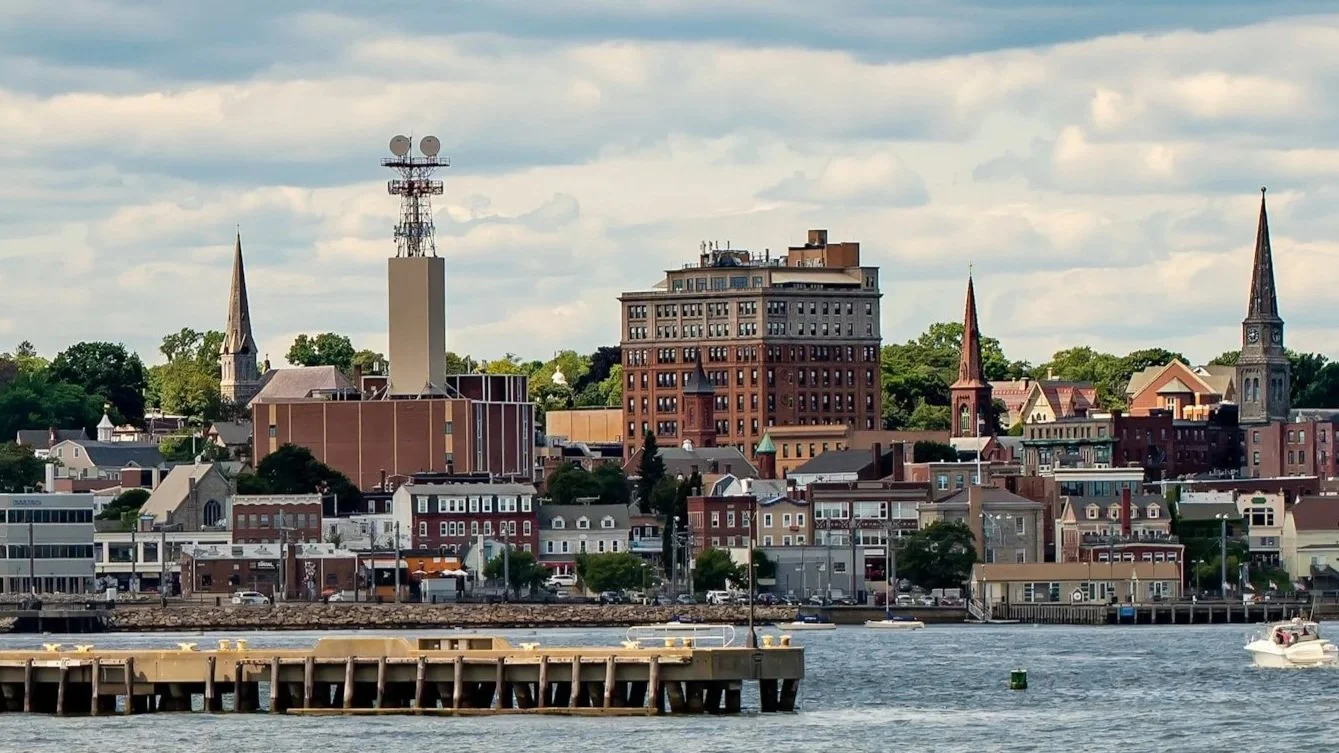
New London, CT
New London is a small coastal city in the middle of its biggest economic moment in decades. Over 1,100 new downtown apartments are in the pipeline, and the $150 million National Coast Guard Museum is set to open on the waterfront in 2026. Add 1.4 million annual ferry passengers crossing through downtown and a state-designated Cultural District anchored by Bank Street, and you have one of the most active restaurant and bar markets in southeastern Connecticut.
How to Get a Liquor Permit in New London, CT
Getting a New London liquor permit (often called a liquor license) requires navigating both Connecticut's state licensing process as well as local zoning requirements. While the state application is handled through the Department of Consumer Protection, New London’s zoning code determines where alcohol-serving uses are permitted by right.
The Connecticut Liquor Permit Application Process
Applications must be submitted through the CT Department of Consumer Protection's eLicense portal and include documentation for three key areas:
The Backer: The business entity, with financial records and ownership documentation
The Permittee: The individual representing your business
The Location: Where alcohol service will take place
Permit types range from Restaurant Liquor (LIR) to Package Store (LIP) to Café (CAF) permits, and each have associated state fees. Most applications take three to six months to process, though provisional permits can be obtained in three to four weeks for an additional cost of $500. For a complete walkthrough of Connecticut's permit process see our guide to Connecticut Liquor Permit applications.
New London Liquor Permit Requirements
WHERE ALCOHOL SERVICE IS PERMITTED in New London
New London's zoning code limits alcohol sales—on-premises and off-premises—to a defined list of districts. Alcohol service is not permitted in any residential district, historic areas, the Institutional district, or the Industrial Hospitality Zone.
Bank Street, the city's primary dining and nightlife corridor, runs through the Central Business District, which contains CBD-1 and CBD-2, the most permissive zones in the city. Both on- and off-premises permits are allowed, and these districts contain unique exemptions that make them particularly attractive for taverns and brew-pubs (more on this below).
The General Commercial (C-1) and Limited Commercial (C-2) districts also allow both on- and off-premises sales and accommodate the full range of restaurant and bar concepts. Restaurants without alcohol service are allowed by right between 6AM and 11PM; restaurants serving beer, wine, or liquor—or operating outside those hours—require a Special Permit. Drinking establishments, taverns, and nightclubs always require a Special Permit.
The Waterfront Development (WD), Waterfront Commercial-Industrial (containing WCI-1 and WCI-2), and Maritime District (MD) zones cover the harbor frontage and Fort Trumbull peninsula. All allow on- and off-premises permits and are well suited to restaurants and bars oriented around the water—a particularly relevant category given the recent closure of the City Dock shipping-container restaurant on Custom House Pier and the resulting gap in waterfront dining.
The Light Industrial Office (LI-O) district allows both permit types and accommodates the same broad range of food-and-beverage uses as the central commercial zones.
The Neighborhood Business (NB) district permits off-premises sales but prohibits on-premises alcohol entirely. Restaurants in NB are allowed only by Special Permit, and only if meals are served at least twice a day with at least 75% of seats at tables—and even then, no alcohol service is permitted. Cafés and restaurants seeking to serve beer and wine in a neighborhood location should look elsewhere.
PROXIMITY RESTRICTIONS
New London's distance rules are strict and apply across multiple permit categories:
1,000 feet between off-premises permits (entrance-to-entrance, straight line)
1,000 feet between on-premises permits (same measurement method)
1,500 feet from any lot containing a public or private school, recognized place of worship, or public hospital — measured lot-line to lot-line, which makes this the more constraining rule in dense areas
A significant carve-out exists in Section 610.H: hotel, restaurant, druggist, non-profit theater, bowling alley, and grocery-store permits are exempt from both the 1,000-foot and 1,500-foot rules in C-1, C-2, CBD-1, CBD-2, WD, WCI-1, WCI-2, and LI-O. For most food-service operators, the exempt-permit category is the practical pathway. Two non-restaurant on-premises permits within 1,000 feet of each other will both be blocked unless one falls into this exempt category.
If a permittee is forced to relocate due to hardship or eviction, they may move within a 750-foot radius of the existing premises notwithstanding distance limits, provided the new location is in a permitted district.
Grocery store beer permits are exempt from the citywide cap and from the 1,000-foot rule. In CBD-1 and CBD-2, they must be tied to a supermarket, grocery store, or delicatessen of at least 1,500 sq ft.
TAVERN AND BREW-PUB EXEMPTIONS: THE CBD ADVANTAGE
New London's zoning creates a unique pathway for two specific concepts in the Central Business Districts:
Tavern permits under 5,000 sq ft of gross floor area are exempt from distance rules in CBD-1 and CBD-2
Brew-pub manufacturer permits under 10,000 sq ft of gross floor area are exempt from distance rules in CBD-1 and CBD-2; brew-pubs are also exempt from B/C distance rules in C-1
This makes downtown New London one of the most permissive environments in Connecticut for size-capped tavern and brew-pub concepts. The footprint constraints are real but workable—Tox Brewing's 14,000 sq ft Bank Street flagship would exceed the brew-pub cap, but many operators can build inside it. Brew-pubs in the CBD and C-1 are also restricted from offering outdoor entertainment with electrically amplified music.
New London PACKAGE STORE LIMIT
Connecticut law allocates package store permits at one per 2,500 residents. With a population of approximately 27,600, New London's cap sits at 10 permits. When the cap is reached, aspiring package store owners often need to acquire existing businesses. To find the current number of package store permits available in New London, check the CT Department of Consumer Protection's database.
LIVE ENTERTAINMENT Rules
Live music, DJ entertainment, dancing, and similar programming are addressed both in the zoning code and in New London's noise ordinance. The noise ordinance limits amplified music to a midnight cutoff on Fridays and Saturdays — an important constraint for any concept oriented around nightlife. The city has been explicit about its preference for restaurant and tavern formats over nightclub formats, and zoning officials have publicly framed downtown alcohol uses as “restaurants, not nightclubs.”
OUTDOOR DINING Rules
Outdoor dining with alcohol service is permitted as an accessory use to a licensed restaurant. As with all alcohol uses, the underlying Special Permit governs what's allowed, and the floor plan submitted must specifically identify any outdoor service area.
New London’s SPECIAL PERMIT PROCESS
This is the part of New London's process that most distinguishes it from neighboring municipalities. Per Section 610.I, no premises may be used for on- or off-premises alcohol sales under any state Liquor Control permit class without first obtaining a Special Permit from the Planning and Zoning Commission, even when the location clearly meets all distance and use rules. Every alcohol engagement in New London involves a public hearing.
Here’s how the procedure works.
Application filed at least 20 days before a regular P&Z meeting
Public hearing required, with notice published in a newspaper of general circulation
Posted sign on the premises at least 15 days before the hearing (provided by the Zoning Officer); failure to post is grounds for automatic denial
Abutter notice mailed to all property owners within 200 feet, with USPS Certificates of Mailing filed at least five days before the hearing
Hearing must commence within 65 days of receipt; decision within 65 days of hearing close
Approved Special Permit must be recorded in the land records before it takes effect
Conditions and safeguards run with the property regardless of ownership change
Site plan submission requirements are substantial: a Class A-2 survey by a Connecticut-registered land surveyor, plans signed and sealed by a Connecticut-registered engineer, architect, or landscape architect, parking and circulation diagrams, sign and lighting plans, utility and topography plans, and—depending on scale—environmental impact and erosion-and-sediment-control plans. The Commission may require a performance bond covering site improvements for up to 2 years.
Plan timeline accordingly: roughly 4 to 6 months from application to recorded permit, longer if revisions are needed.
Not Sure Where to Start?
We offer a Feasibility Study that evaluates your location, eligibility, and zoning requirements before you commit to the full application. Schedule a call to find out if you qualify for a New London liquor permit.
Why New London?
A CITY AT AN INFLECTION POINT
There has not been a moment like this in New London in living memory. Mayor Michael Passero put it directly in late 2025: there has not in his lifetime been so much interest by developers and investors in the city's historic structures downtown. The Downtown Strategic Planning Task Force, launched in November 2025 in partnership with Connecticut Main Street Center, is explicitly working to fill commercial vacancies—and the city's economic development director has described downtown as becoming “not just a center of commerce or a center of business, but also becoming a neighborhood.” The signal to new food-and-beverage operators is clear and unusually open.
ELECTRIC BOAT IS RESHAPING THE WORKFORCE
The single largest demand driver for New London restaurants and bars is the workforce expansion at General Dynamics Electric Boat, headquartered just across the Thames in Groton. Submarine contracts on the Block V Virginia-class and Columbia-class programs extend through 2040 and beyond. EB hired more than 12,000 workers between 2023 and 2025—the best three-year hiring stretch in company history, exceeding the World War II and Cold War peaks. Peak Groton employment is projected at roughly 20,000 by 2029. EB also acquired Crystal Mall in Waterford, with 4,000 to 5,000 employees expected there by mid-2027. These are young, well-paid engineers and tradespeople, many renting downtown apartments and spending in the surrounding commercial corridors.
THE NATIONAL COAST GUARD MUSEUM
The $150 million, 89,000 sq ft, six-story National Coast Guard Museum is under active construction on the waterfront behind Union Station and is expected to open in 2026. Projected attendance is 300,000 visitors annually, free to the public, with a pedestrian bridge connecting the museum to the Water Street parking garage. This is the only national museum for the only military branch without one. Federal funding was tripled in 2025, and steel framing was rising as of late 2025. The museum will permanently anchor the waterfront end of Bank Street.
1,100+ NEW APARTMENTS IN THE PIPELINE
Downtown New London is converting from a commercial district to a live-work-play neighborhood at a pace unusual for a city of 27,000. The Beam (203 units, completed) is Connecticut's largest Opportunity Zone project since the 2017 tax law. The Docks at Shaw's Cove added 137 units. A 236-unit Hamilton Street project — the largest to date, according to the mayor—is planned for the same area. Howard Street in Fort Trumbull will add roughly 200 units backed by $30 million. The 208 State Street mixed-use conversion adds 40 apartments above 10,000 sq ft of office space, with completion expected in August 2026. The Bloom Silk Mill on Garfield Avenue could add up to 90 units. A Fort Trumbull hotel-and-apartments project adds 100 hotel rooms and roughly 100 apartments. Combined with the Bayonet Street, Vessel, and former Day Building projects, the total pipeline approaches 1,200 units—concentrated in walkable downtown locations where residents will be daily restaurant and bar customers.
BANK STREET IS THE CENTER OF GRAVITY
Bank Street is unambiguously the primary restaurant and nightlife corridor in New London, with a density of establishments that's striking for a city this size. Tox Brewing relocated to a 14,000 sq ft Bank Street flagship in November 2024—opening night sold out pizza dough. Water Street Waffle Company opened at 133 Bank Street in early 2025. Harbor Cantina opened at 32 Bank Street in July 2025. Cafe Le Bank operates until 2 a.m. on weekends. The Social Bar + Kitchen carries the largest craft beer selection in southeastern Connecticut. Favorites Bistro Bar, Blue Duck Bar & Kitchen, Muddy Waters Cafe, and Oasis Pub round out the corridor. The ethnic cuisine diversity is a defining competitive advantage—Sri Lankan, Indian, Guatemalan, Dominican, Peruvian, Thai, Jamaican, and more—reflecting a population that is 35.5% Hispanic, 12.9% Black, and 18.1% foreign-born, and drawing diners from less diverse surrounding suburbs.
A STATE-DESIGNATED CULTURAL DISTRICT
New London was designated Connecticut's third Cultural District in May 2022—the first along the shoreline—covering State, Bank, and Howard Streets. The Hygienic Art complex at 79 Bank Street produces 70+ exhibits and 100+ music and cultural events each year across four gallery spaces and an outdoor Art Park. The Wall to Wall Mural Walk spans 24 murals across 6 blocks of downtown, described as the largest mural walk in New England, funded by a $126,000 state City Canvases grant. The Garde Arts Center, a restored 1,420-seat 1926 movie palace at 325 State Street, runs a packed year-round calendar of Broadway tours, symphony performances, concerts, comedy, and film—every show generating pre- and post-show dining demand within walking distance. The Custom House Maritime Museum, the Lyman Allyn Art Museum, and the 26-block National Register Historic District round out the cultural fabric.
TRANSIT CONNECTIVITY IS A REAL ADVANTAGE
For a city of 27,000, New London's intermodal connectivity is unusual. Union Station handles approximately 18 Amtrak Northeast Regional trains daily on the Boston–Washington corridor, plus Shore Line East commuter rail seven days a week with onward Metro-North service to New York. Cross Sound Ferry carries roughly 1.4 million passengers annually between New London and Orient Point on Long Island, with up to 52 to 58 daily departures during peak summer. Block Island Express runs seasonal high-speed service from the same terminal. Fishers Island Ferry operates year-round. The terminal sits steps from downtown restaurants, delivering a constant stream of visitors. I-95 runs directly through the city at Exits 83 and 84.
STATE PIER AND OFFSHORE WIND
The Connecticut Port Authority's State Pier received a $310 million-plus redevelopment to become the Northeast's first offshore wind marshaling terminal, with Ørsted holding a 10-year lease through 2033. Three projects are using the pier: South Fork Wind (complete), Revolution Wind (powered on March 2026), and Sunrise Wind (assembly continuing through end of 2027). The pier creates 120+ union jobs on-site, with workers explicitly noted as frequenting local restaurants and shops. A proposed Starboard Wind project would add 800+ FTE positions if approved.
A YOUNG, DINING-OUT POPULATION
New London's demographics are a strong fit for restaurant and bar demand. The median age is 34.7 versus 41.1 statewide, and 32.4% of residents are aged 18 to 34. The city is 58.9% renter-occupied with 50.9% non-family households—a profile that strongly correlates with dining-out frequency. Anchor institutions add a steady customer base: Connecticut College (~1,990 students), the U.S. Coast Guard Academy (~1,000-1,100 cadets plus staff), Mitchell College (~500 students), and L+M Hospital (2,400+ staff). Combined college-associated population approaches 4,500 to 5,000.
Median household income at $59,098 is below the state median, and the market is bifurcated—there is real demand for both affordable ethnic eateries and higher-end concepts. The luxury apartment renters and incoming EB workforce represent a higher-income overlay on the existing population. Food preparation and serving is the #1 occupation among New London residents, confirming hospitality's centrality to the local economy.
INCENTIVES AND OPEN OPPORTUNITIES
New London benefits from federal Opportunity Zone designations in Fort Trumbull and Hodges Square, and Enterprise Zone incentives offering 5-year, 80% property tax abatement for qualifying businesses. The Renaissance City Development Association has facilitated approximately $500 million in investment over the past decade. The Grand List of taxable property rose 5.5% in 2021, with commercial values up 9%, allowing the city to reduce its tax rate. The city describes a $1 billion development pipeline across sectors.
The clearest open opportunities are concepts that fill identifiable gaps: waterfront dining following the City Dock closure on Custom House Pier, an upscale cocktail bar (none currently anchors the market), additional brunch destinations following Water Street Waffle's successful arrival, and ethnic cuisine concepts that leverage the city's diversity. Tox Brewing is the city's anchor brewery and the only one within city limits—meaningful white space remains for additional brewery, taproom, and distillery concepts. No distilleries operate within city limits, and no wineries—both notable gaps for manufacturer permit applicants.
THE OPPORTUNITY
New London offers a combination that's rare in any Connecticut market: a city investing heavily in downtown transformation, an unprecedented workforce expansion at its largest regional employer, a major federal tourism anchor opening within the year, more than 1,100 new apartments under construction within walking distance of the central business district, and a city government openly courting new food-and-beverage operators. Bank Street is the proven location, the CBD's tavern and brew-pub exemptions create a unique structural advantage, and the city's Special Permit framework — while procedurally rigorous — is being applied by a Commission that has recently demonstrated willingness to approve new alcohol uses aligned with downtown revitalization goals. Operators who move early will benefit from a growing market with limited direct competition.
Ready to Apply for a New London Liquor Permit?
For $350, we assess your location and eligibility before you invest in the full application. The fee applies toward your consulting engagement if you move forward. Tell us about your project below to meet with a liquor permit consultant.