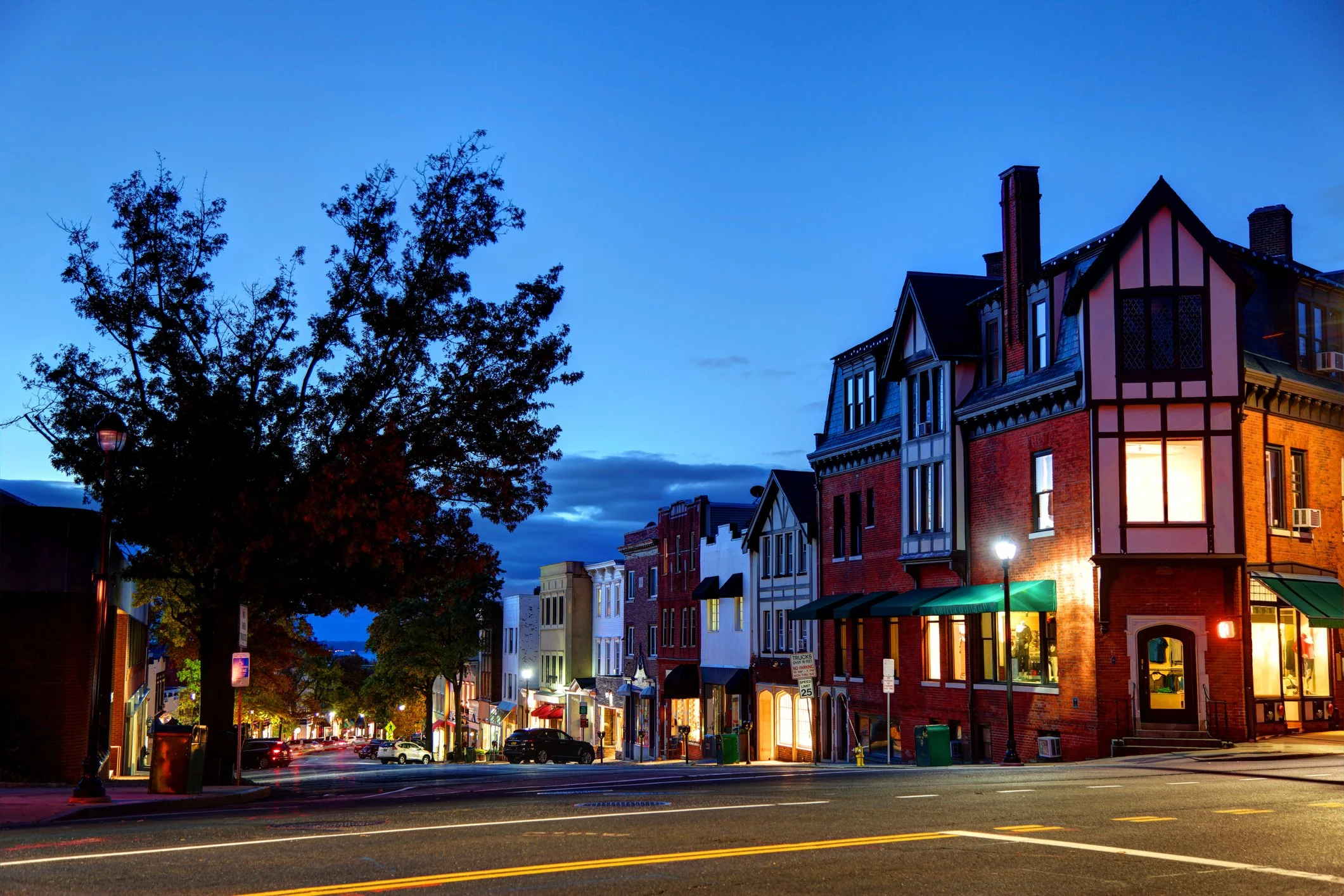
Greenwich, CT
Greenwich is a town of roughly 63,000 on the New York border, and one of the wealthiest municipalities in the country. Rather than a single downtown, Greenwich hosts a collection of villages, like Old Greenwich, Cos Cob, Riverside, and Glenville, each with its own commercial character and its own customer.
How to Get a Liquor Permit in Greenwich, CT
Getting a Greenwich liquor permit (often called a liquor license) requires navigating both Connecticut’s state licensing process as well as local zoning requirements. While the state application is handled through the Department of Consumer Protection, Greenwich’s zoning code determines where alcohol service may take place.
The Connecticut Liquor Permit Application Process
Applications must be submitted through the CT Department of Consumer Protection’s eLicense portal and include documentation for three key areas:
The Backer: The business entity, with financial records and ownership documentation
The Permittee: The individual representing your business
The Location: Where alcohol service will take place
Each permit type (such as Restaurant Liquor or Package Store permits) has associated state fees. Most applications take three to six months to process, though provisional permits can be obtained in three to four weeks for an additional cost of $500. For a complete walkthrough of Connecticut's permit process see our guide to Connecticut Liquor Permit applications.
Greenwich Liquor Permit Requirements
Where Alcohol Service Is Permitted in Greenwich
Most Connecticut cities have one downtown. Greenwich has six commercial cores:
Greenwich Avenue is the mile-long retail spine running from Putnam Avenue down to the train station. It is dense, walkable, and the most expensive real estate in the state. It carries the marquee names, such as Jean-Georges Vongerichten's Happy Monkey, Brian Lewis's The Cottage, Mediterraneo, and Hinoki. In recent years, Greenwich Avenue's center of gravity has been drifting toward Railroad Avenue.
Old Greenwich is a beach neighborhood that runs along Sound Beach Avenue and has its own Metro-North station, its own library, and a village feel that supports neighborhood restaurants.
Cos Cob and Riverside both sit on the East Putnam Avenue corridor, both have train stations, and both skew toward everyday neighborhood tenants.
Glenville, in western Greenwich, has quietly become a destination district. The restored mill complex on the Byram River now houses multiple restaurants, and a DeCicco & Sons is taking over the former Stop & Shop site.
Byram is the dense, working-class corner on the New York line, with the lowest occupancy costs in town and a very different customer.
Backcountry Greenwich, north of the Merritt, has no commercial core, though it does include a few country clubs.
THE CAFÉ PERMIT IS PROHIBITED IN GREENWICH
Since 1997, Greenwich has effectively banned the Café (CAF) permit, one of the most common permit classes in Connecticut, meaning that dining and nightlife center on restaurants, not bars. Greenwich makes a narrow exception for recreational facilities and theatres in Central Greenwich, but the town requires that even these businesses have ability to serve food.
No Proximity Restrictions
Unlike many Connecticut municipalities, Greenwich imposes no separation rules on bars and restaurants. In 2014, the town deleted the 1,000-foot distance requirement between package store permits, and in 2018, it removed the remaining separation requirements between alcoholic establishments entirely.
Greenwich Package Store Limit
Connecticut law allocates Greenwich a maximum of 25 package store permits (one per 2,500 residents). When the cap is reached, aspiring package store owners often acquire existing businesses. To find the current number of package store permits available in Greenwich, check the CT Department of Consumer Protection’s database.
Not sure where to start?
We offer a Feasibility Study that evaluates your location, eligibility, and zoning requirements before you commit to the full application. Schedule a call to find out if you qualify for a Greenwich, CT liquor permit.
Why Greenwich?
The Business Lunch Economy
Greenwich is the hedge fund capital of Connecticut, home to AQR, Lone Pine, Viking Global, Hudson Bay, and others, clustered around Greenwich Plaza, Pickwick Plaza, Railroad Avenue, and West Putnam Avenue. The high density of such businesses drive weekday lunch and happy hour activity that most suburban markets simply do not have. Expense-account dining has helped sculpt a niche for steakhouses, high-end Italian, and sushi.
A STATION REBUILT
The Greenwich train station reopened in January 2026 after a roughly $30 million redevelopment by the Ashforth Company. The old Bow Tie Cinemas came down, the station got a new facade, elevator, and glass entrances, and the project adds ground-floor retail plus a new anchor restaurant with outdoor seating—the developers have sought approval for a 150-seat operation with valet parking.
EVENTS AND FOOT TRAFFIC
Greenwich's event calendar is smaller than a city's but the events are large and the attendees spend.
The Greenwich Town Party at Roger Sherman Baldwin Park is the flagship — a Memorial Day weekend concert festival that has drawn Billy Joel, Eric Clapton, the Eagles, and Paul Simon, hitting its 15th year in May 2026. The Greenwich International Film Festival runs in June. The Greenwich Concours d'Elegance is the largest car show in the Northeast. The Greenwich Wine + Food Festival lands in the fall. Greenwich Polo Club runs Sunday matches from June through September.
The Bruce Museum reopened in 2023 after a $67 million expansion that roughly doubled it to 70,000 square feet, adding an art wing, an auditorium, and event space a regional draw with a café and a wedding business attached.
Greenwich Point (Tod's Point) is 147 acres of shoreline in Old Greenwich with roughly 1,100 parking spaces and heavy summer traffic. Non-residents can access it, but only with passes bought in advance off-site, which shapes who actually shows up.
New Residents in the near future
Greenwich has recently seen a proposal to replace 66 units at Western Junior Highway with a six-story building of roughly 170. There’s also the Chilston Court conversion of the former Honda dealership on Mason Street, and smaller projects on East Putnam Avenue and in Byram. The direction is toward more rental density near the downtown core and a younger customer base than Greenwich has historically had.
THE OPPORTUNITY
Greenwich offers something rare: extreme purchasing power, a weekday corporate lunch economy, waterfront and mill-district settings, and a walkable main street, plus a newly rebuilt train station with restaurant space still to fill.
Ready to Apply for a Greenwich Liquor Permit?
For $350, we assess your location and eligibility before you invest in the full application. The fee applies toward your consulting engagement if you move forward. Tell us about your project below to meet with a liquor permit consultant.