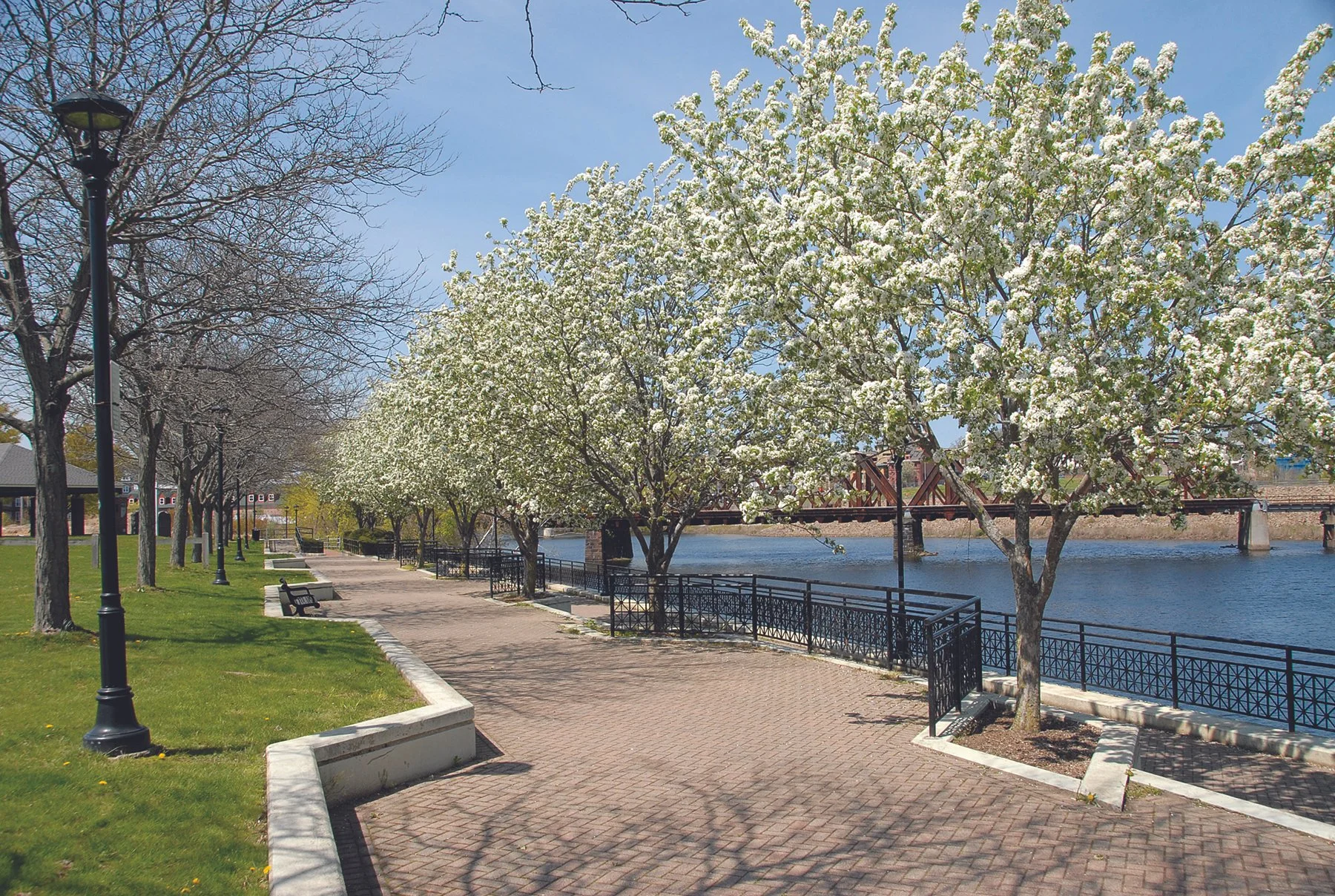
Shelton, CT
Shelton is a Housatonic River city of roughly 43,000 where a rebuilt downtown along Howe Avenue and a corporate corridor on Bridgeport Avenue create two distinct dining markets. With a median household income of $108,185, Shelton pairs Fairfield County purchasing power with Naugatuck Valley operating costs.
How to Get a Liquor Permit in Shelton, CT
Getting a Shelton liquor permit (often called a liquor license) requires navigating both Connecticut’s state licensing process as well as local zoning requirements. While the state application is handled through the Department of Consumer Protection, Shelton’s zoning code determines where alcohol service may take place.
The Connecticut Liquor Permit Application Process
Applications must be submitted through the CT Department of Consumer Protection’s eLicense portal and include documentation for three key areas:
The Backer: The business entity, with financial records and ownership documentation
The Permittee: The individual representing your business
The Location: Where alcohol service will take place
Permit types range from Restaurant Liquor (LIR) to Package Store (LIP) to Café (CAF) permits, and each have associated state fees. Most applications take three to six months to process, though provisional permits can be obtained in three to four weeks for an additional cost of $500. For a complete walkthrough of Connecticut's permit process see our guide to Connecticut Liquor Permit applications.
Shelton Liquor Permit Requirements
Where Alcohol Service Is Permitted in Shelton
Shelton’s zoning code allows restaurants in key commercial districts, but requires approval of a special application. Those districts cover the northern part of Bridgeport Ave, parts of Downtown Shelton, especially along Howe Ave, and parts of River Road.
For restaurants or lounges with more than sixteen seats, Shelton requires one parking space per hundred square feet, plus one additional space for every 50 square feet of bar area. Along Bridgeport Ave, parking lots are plentiful, but businesses downtown may need to think ahead to meet these requirements.
Application for a Certificate of Zoning Compliance
Businesses must submit an Application for a Certificate of Zoning Compliance, accompanied by a statement of use, site plan, and architectural plans. Upon submission, Shelton’s Planning and Zoning Department may issue—within 65 days—an approval, disapproval, or an approval conditional upon modifications to the site plan. The department takes into account the effect of the establishment on traffic, the neighborhood’s character, flooding hazards, and other considerations.
No Proximity Restrictions
Unlike many Connecticut municipalities, Shelton imposes no separation rules on bars and restaurants. There are no minimum distances required between these alcohol-serving businesses or between those businesses as well as churches and schools. This gives Shelton businesses unusually broad site flexibility when evaluating locations. There is one exception, adult-oriented businesses, which must conform to the zoning code’s separation guidelines.
Shelton Package Store Limit
Connecticut law allocates Shelton a maximum of 16 package store permits (one per 2,500 residents). When the cap is reached, aspiring package store owners often acquire existing businesses. To find the current number of package store permits available in Shelton, check the CT Department of Consumer Protection’s database.
Not sure where to start?
We offer a Feasibility Study that evaluates your location, eligibility, and zoning requirements before you commit to the full application. Schedule a call to find out if you qualify for a Shelton, CT liquor permit.
Why Shelton?
TWO DINING MARKETS IN ONE CITY
Shelton is large, one of the biggest municipalities in Fairfield County by area, supporting two distinct restaurant markets:
Bridgeport Avenue is the corporate corridor off Route 8 and includes office parks, hotels, and shopping centers. The area holds several million square feet of office and flex space, and Bridgeport Ave itself carries over 25,000 vehicles a day. The trade area pulls from Seymour, Ansonia, Derby, Monroe, and Trumbull as well as Shelton. Demand runs weekday-lunch heavy and car-dependent, with a hotel cluster: Hyatt House, Courtyard by Marriott, Hilton Garden Inn, Hampton Inn that feeds businesses dinner traffic. Fountain Square, built in 2025, added Trader Joe's, Cava, and Panera to an already dense retail strip. Established destinations here include Wellington's, in business over 36 years, along with Market Place Kitchen & Bar, Mercato Italian Kitchen & Bar, Spotted Horse Tavern, and Little Barn. In January 2026, Colony Grill opened at 902 Bridgeport Avenue—the 90-year-old Stamford institution’s first new Connecticut location since Norwalk in 2015.
Downtown Shelton, roughly a half-mile of Howe Avenue plus the Canal Street riverfront, has the opposite vibe: walkable, independent, evening-and-weekend driven, built into 19th-century brick mill blocks along the Housatonic River. This is where the city has changed most.
Agricultural Chops
While Shelton currently hosts no breweries (unlike nearby Stratford, home to Two Roads), its extensive agricultural territory allows for wine tasting experiences. Jones Family Farms & Winery in White Hills has been farmed by the same family since the 1840s and is now in its seventh generation. Jamie Jones planted the first acre of vineyard in 1999; the tasting room occupies a restored 19th-century dairy barn on a working 400-acre farm.
A DOWNTOWN Rebuilt
Downtown Shelton spent thirty years as a former industrial center in disrepair. The defining event was a 1975 arson fire that destroyed the B.F. Goodrich Sponge Rubber plant, leaving a concrete pad locals called “The Slab.” That site is now Veterans Memorial Park and the Shelton Riverwalk. Today, the blocks above have been filled in.
Private developers have invested well over $144M in downtown projects, delivering hundreds of apartments across Bridge Street Commons I and II, Cedar Village at Carroll’s, 502 On Howe, Riverwalk Place, Riverview Park Royal, and Chromium Commons. Developers describe the tenants as professionals seeking smaller units, skewing younger than Shelton’s median age. They make up a new customer base keen to enjoy the downtown area.
Newer venues like Tacomida and Chaplin are taking advantage of the enlivened locale. In 2023, owners of seven downtown restaurants organized the Downtown Shelton Bar & Restaurant Cooperative, meaning that enough independent operators now exist in a half-mile stretch to form a trade group. Their shared complaints are about parking and lighting needs, not demand.
EVENTS AND FOOT TRAFFIC
Veterans Memorial Park on Canal Street sits at the foot of the downtown restaurant district and functions as the city’s event engine. Downtown Sounds, produced by Celebrate Shelton, is in its 13th year and draws thousands from across the Naugatuck Valley for an evening of live music, food trucks, and a pop-up bar. The Shelton Farmers Market runs Saturday mornings at 100 Canal Street from mid-May through October. Shelton Day brings vendors, carnival rides, and food trucks downtown each fall, and Food Trucks on the River returns seasonally. The well-attended Shelton-Derby fireworks are held at the park each July.
Center Stage Theatre on Grove Street entered its 21st season in 2026 with a five-show subscription series plus a large youth education program. On the south end of the city, SportsCenter of Connecticut on River Road generates regular youth hockey and skating interest. Restaurant owners have been keen to become the go-to spot for post-game (or even post-performance) celebrations. Colony Grill explicitly positioned itself as a natural haven.
And then there’s the night before Thanksgiving. Ask anyone who grew up in the area, and they’ll tell you that Thanksgiving Eve has been one of the biggest nights of the year—anywhere in Fairfield County—for well over a decade. Returning college students pack downtown bars annually in what has become a longstanding tradition called Valley New Years.
A REGION UNDER CONSTRUCTION
The Derby-Shelton train station sits directly across the Housatonic from downtown Shelton on Metro-North’s Waterbury Branch Line. CTDOT began a nearly $40M reconstruction in 2026 that will deliver a new 350-foot platform, real-time arrival information, full ADA access, restoration of the vacant historic station building, and new bus bays connecting CTtransit, Greater Bridgeport Transit, and Valley Transit District. The new platform is scheduled to open by 2028.
Across the bridge, Derby completed an almost $20M reconstruction of Route 34 in 2025—widening, medians, expanded parking, and pedestrian improvements—which won a regional 2026 America’s Transportation Award. Derby also controls roughly 14 riverfront acres at the confluence of the Housatonic and Naugatuck targeted for mixed-use redevelopment. The two downtowns face each other across a bridge and function, in practice, as one small walkable district split by a river.
THE OPPORTUNITY
Shelton offers a combination that is rare in this market: a Fairfield County address with Valley operating costs, a population that has grown 6.5% since 2020, and a median household income above $108,000. It supports two commercial districts in one city, a corridor play for weekday volume and a downtown play buoyed by walkability and nightlife. Downtown’s residential demand arrived before the restaurant supply did, and the business owners who got there first are already opening second concepts. Plus, infrastructure is now being built to support even more activity.
Ready to Apply for a Shelton Liquor Permit?
For $350, we assess your location and eligibility before you invest in the full application. The fee applies toward your consulting engagement if you move forward. Tell us about your project below to meet with a liquor permit consultant.